

When Do Commercial Tanks and Vessels Need Insulation?
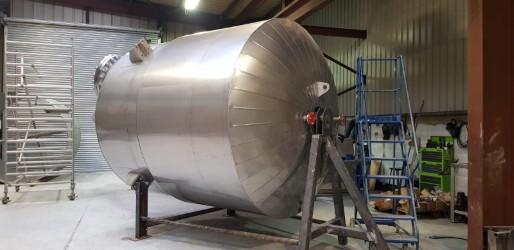
Industrial tank insulation is used where a tank or vessel needs help controlling heat transfer, maintaining a required temperature, reducing condensation risk, protecting against freezing or limiting hot-surface exposure. The correct approach depends on the process, stored product, operating temperature, environment and the condition of the tank or vessel itself.
We install thermal insulation to commercial and industrial plant items, including tanks and vessels. Our vessel insulation service is planned around the individual application rather than applying one standard build-up to every tank.
When Is Industrial Tank Insulation Needed?
A tank or vessel may need insulation when uncontrolled heat transfer would affect the process, the stored material, energy efficiency or the surrounding working environment. Typical reasons include reducing heat loss from hot storage tanks, limiting heat gain into low-temperature services, supporting frost protection and controlling external surface temperatures where personnel may work nearby.
The need for tank insulation is therefore linked to the duty of the equipment. Two vessels of a similar size may require very different insulation systems if one operates hot, another operates cold and a third is exposed to outdoor weather.
Temperature Control and Heat Transfer
Tanks and vessels exchange heat with their surroundings through conduction, convection and radiation. The rate of heat transfer is influenced by factors including surface temperature, ambient conditions, the thermal conductivity of the insulation system, surface emissivity and air movement around the vessel.
Industrial tank insulation adds a controlled thermal barrier between the process and the surrounding environment. For a heated process, reducing heat loss can help the system maintain the required temperature with less avoidable energy input. For cooler processes, suitable vessel insulation can reduce unwanted heat gain. Where heating or cooling is used to maintain the process temperature, limiting avoidable heat transfer can also help reduce the energy needed to hold the tank at its set point and support lower energy consumption.
The operating temperature and required temperature range are central to the specification. The selected insulation materials and thickness should be suitable for the service conditions, and the design should account for the shape of the tank, nozzles, supports, access points and other areas where continuity can be difficult to maintain.
Condensation Control on Cold Tanks and Vessels
Cold tanks and vessels can experience surface condensation when the external surface temperature falls below the surrounding air’s dew point. If the insulation system allows moisture ingress or contains gaps, condensation control can be compromised.
For low-temperature applications, the insulation and vapour-control strategy should therefore be treated as a complete system. A vapour barrier helps limit moisture transmission into the insulation, while joints, penetrations and terminations need particular attention because moisture can enter through relatively small defects. If moisture reaches the insulation or vessel surface, the consequences can include saturated insulation, loss of thermal performance and an increased risk of corrosion under insulation.
That is why we do not treat condensation control as a matter of thickness alone. Material selection, vapour-barrier continuity, workmanship and suitable external protection all have to work together.
Frost Protection and External Tank Insulation
Where equipment is exposed to low ambient temperatures, tank and vessel insulation can form part of the strategy used to reduce the risk of freezing. Insulation does not create heat, so whether it is sufficient on its own depends on the stored material, ambient conditions, operating pattern and any associated heating or trace-heating requirements.
For outdoor applications, the insulation usually needs protection from weather and mechanical damage. Cladding can help protect the insulation from rain, UV exposure and impact, provided joints and penetrations are detailed so water is not encouraged into the system.
Our cladding options can include aluminium, aluzinc and stainless steel where these suit the project specification. Some metal finishes can also be painted in our workshop to a specified RAL colour where required by the customer. The appropriate exterior protection depends on the environment, vessel geometry and maintenance requirements rather than one standard finish for every tank.
Personnel Protection Around Hot Vessels
Industrial tank insulation can also help lower accessible surface temperatures around hot equipment. This can support personnel protection where operators or maintenance teams work close to a vessel, although the required surface temperature and safeguarding measures should be defined by the project risk assessment and design requirements.
Insulation should not be treated as the only control where there is a significant contact-burn risk. Access, guarding, labelling and operational controls may also be relevant depending on the site and equipment.
What Does BS 5422 Mean for Tank and Vessel Insulation?
The current BS 5422:2023 covers thermal insulating materials for pipes, tanks, vessels, ductwork and equipment within its stated operating range. It provides a method for specifying minimum thermal insulation requirements rather than prescribing one thickness for every vessel.
That means the correct storage tank insulation specification depends on variables such as operating temperature, insulation performance, geometry, surface conditions and the design objective. A thickness or material used successfully on one tank should not automatically be copied to another.
A compliant installation also needs to be traceable. Depending on the project scope, useful records can include the insulation specification, manufacturer datasheets, agreed material details, inspection records, photographic evidence and QA documentation showing how the tank and vessel insulation was installed.
What Should Be Considered When Selecting Tank Insulation?
The starting point is the duty of the tank or vessel. The specification should consider the required temperature, whether the system is intended primarily to reduce heat loss or heat gain, condensation risk, frost protection, personnel safety and the surrounding environment.
Material properties also matter. Depending on the application, industrial tank insulation may use materials such as mineral wool, phenolic foam, PIR or PUR, or cellular glass. These materials differ in thermal conductivity, service-temperature limits, moisture behaviour, fire performance and compatibility with different process environments.
We do not apply one material to every vessel. The correct choice depends on the specified duty and the performance required from the complete insulation system.
External conditions need equal attention. Where insulation is exposed to weather, the protective finish should be compatible with the environment and installed so that water is not encouraged into the system. Moisture trapped behind damaged cladding or poorly sealed joints can create corrosion risk on susceptible equipment, which is why inspection and maintenance remain important after installation.
How We Approach Tank and Vessel Insulation
We first work from the project information available for the tank or vessel, including operating conditions, the specified insulation system and the required finish. Where details need clarification, we raise that before installation rather than assuming one standard solution will suit every application.
Our work can include tank insulation, vessel insulation, storage tank insulation and associated protective cladding where specified. We focus on continuity around nozzles, supports and access points because these interfaces can affect the overall insulation performance if they are poorly detailed.
Quality assurance matters before the insulation is concealed by outer finishes. Depending on the project requirements, installation records and photographic evidence can help confirm that joints, vapour barriers, fittings and interfaces were completed before cladding closes the system up.
Where an existing installation is being replaced or repaired, the condition of the existing insulation and outer finish also matters. Damaged, wet or missing insulation can reduce performance and may conceal deterioration beneath the cladding, so the scope should allow the condition of the underlying system to be properly assessed.
When Should Existing Vessel Insulation Be Reviewed?
Existing insulation should be reviewed when there is visible damage, missing cladding, persistent condensation, signs of moisture ingress, unusual temperature variation or evidence that the tank is no longer maintaining its required process conditions as expected.
A review may also be appropriate when the duty of the vessel changes. A different operating temperature, stored material or external environment can change what the insulation system needs to achieve. In those cases, the existing build-up should not automatically be assumed to remain suitable.
Visible cladding damage should not be ignored. Water ingress through poorly sealed joints or penetrations can saturate insulation and contribute to corrosion under insulation, so weatherproofing and inspection form part of long-term tank and vessel insulation performance.
Frequently Asked Questions
Expert Guides
Our goal at Thermal Clad is to not only provide our customers with the finest service possible but also to keep them informed about new products and industry trends.
Please feel free to check out some of our expert insulation guides below:
When Do Commercial Tanks and Vessels Need Insulation?
Industrial tank insulation is used where a tank or vessel needs help controlling heat transfer, maintaining a required temperature,…
Pipe Insulation Standards: What Should a Compliant Contractor Provide?
Pipe insulation standards are not only about choosing a material and wrapping a pipe. On commercial and industrial projects,…
How Poor Pipework Insulation Increases Heat Loss and Energy Costs
Pipework carries heated water, steam and other fluids throughout commercial and industrial buildings. When it is left bare, inadequately…
Where Is Acoustic Insulation Most Needed in Commercial and Industrial Building Services?
Unwanted noise is a common challenge in commercial and industrial buildings, affecting everything from occupant comfort and productivity to…
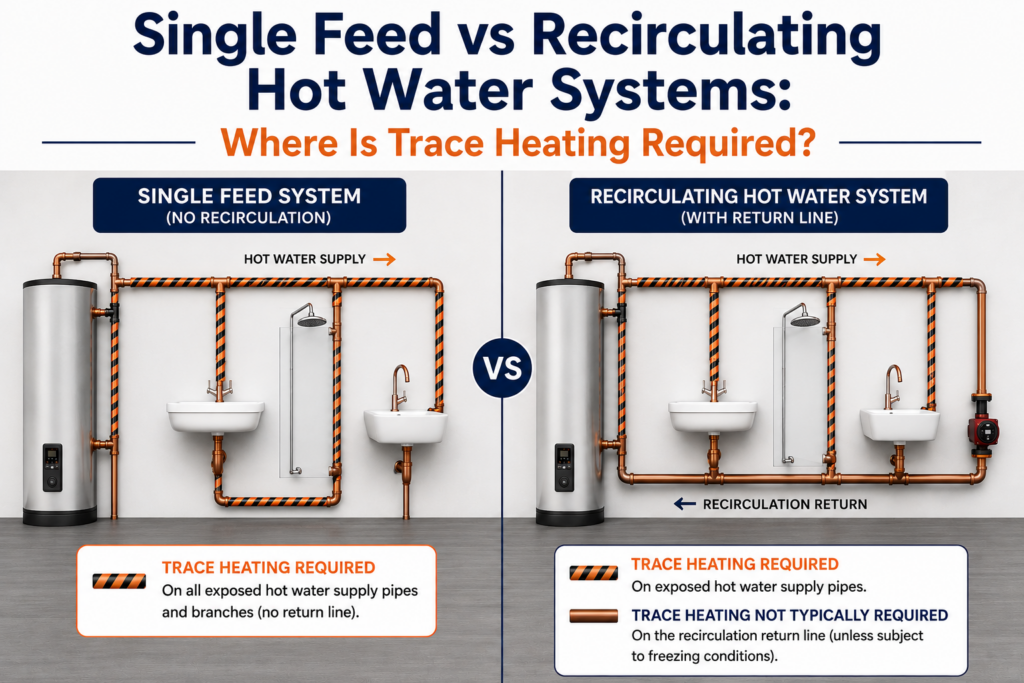
Single Feed vs Recirculating Hot Water Systems: Where Is Trace Heating Required?
Hot water systems are a vital part of commercial and industrial buildings, particularly where fast delivery, temperature control, and…
When Should You Use Weatherproof Jacketing on External Pipework and Ductwork?
External pipework and ductwork are constantly exposed to harsh environmental conditions, including freezing temperatures and heavy rain, as well…
Black and Colour-Finished Insulation Systems for Exposed HVAC Services
Modern commercial and industrial buildings increasingly leave ductwork and pipes exposed as part of the architectural concept. In offices,…

Insulation Solutions for Exposed Pipework and Ductwork in Commercial Interiors
In commercial and industrial buildings, exposed pipework and ductwork form a critical part of the mechanical infrastructure that supports…

Insulating Exposed Ductwork: Options, Aesthetics, and Performance
Key Takeaways This guide outlines the main insulation methods, planning considerations, and aesthetic requirements raised by facilities managers, contractors,…
Commercial Building Services Insulation: Reducing Energy Loss, Carbon Emissions and Costs
In commercial buildings, a significant amount of energy loss occurs through mechanical and HVAC services rather than the building…