

Single Feed vs Recirculating Hot Water Systems: Where Is Trace Heating Required?
- What's the difference between single-feed and recirculating systems?
- What is a single-feed hot water system?
- What is a recirculating hot water system?
- Where is trace heating needed?
- The benefits of insulation in hot water systems
- Recirculating pump types and controls
- Installation and retrofit considerations
- Energy use and water efficiency
- Which system is best?
- Why Choose Thermal Clad?
- Frequently Asked Questions
Hot water systems are a vital part of commercial and industrial buildings, particularly where fast delivery, temperature control, and energy efficiency are priorities. Whether supplying hot water to accommodation blocks, healthcare facilities, or commercial kitchens, choosing the correct system design directly affects performance, running costs, and user comfort.
When comparing a single feed and a recirculating hot water system, one of the most important considerations is how water temperature is maintained throughout the pipework. In many buildings, especially those with long pipe runs or multiple distant fixtures, heat loss within the system can lead to delays, wasted water, inconsistent temperatures, and increased energy use.
This is where temperature maintenance trace heating becomes increasingly important. Trace heating pipework systems are designed to maintain a consistent water temperature across domestic hot water services, helping to reduce heat loss, minimise cold-water slug issues, and improve system efficiency.
At Thermal Clad, we provide specialist insulation, trace heating, and cladding services for commercial and industrial clients throughout the UK. In this expert guide, we compare single-feed and recirculating hot water systems, explain how each system operates, and outline where trace heating is required to maintain reliable hot water performance.
What’s the difference between single-feed and recirculating systems?
The main difference between a single-feed and a recirculating hot water system lies in how hot water is delivered and maintained throughout the building.
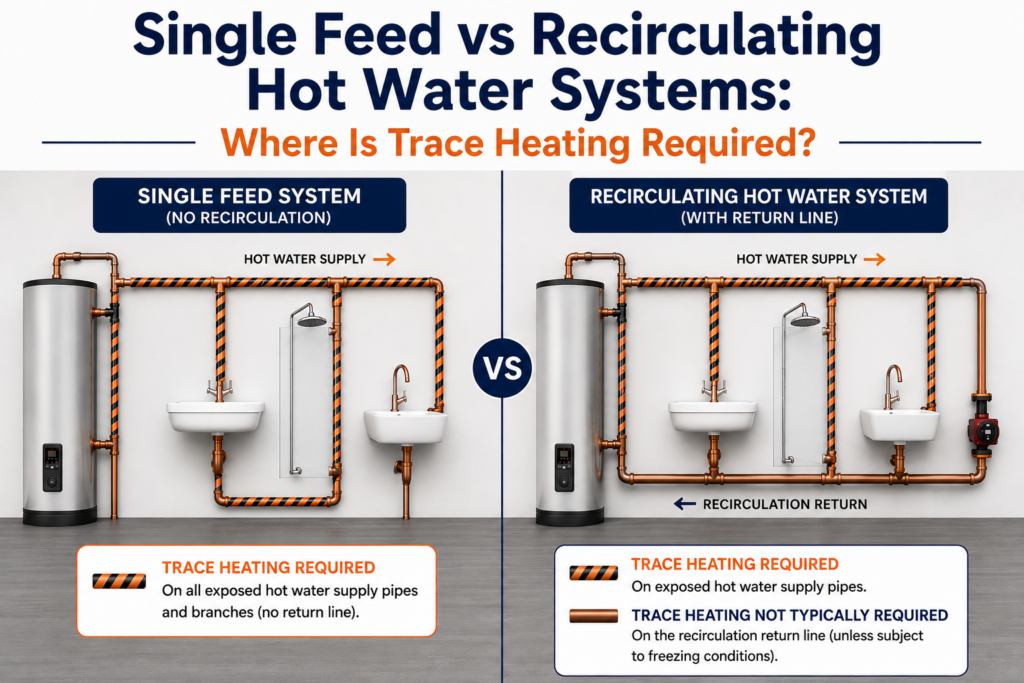
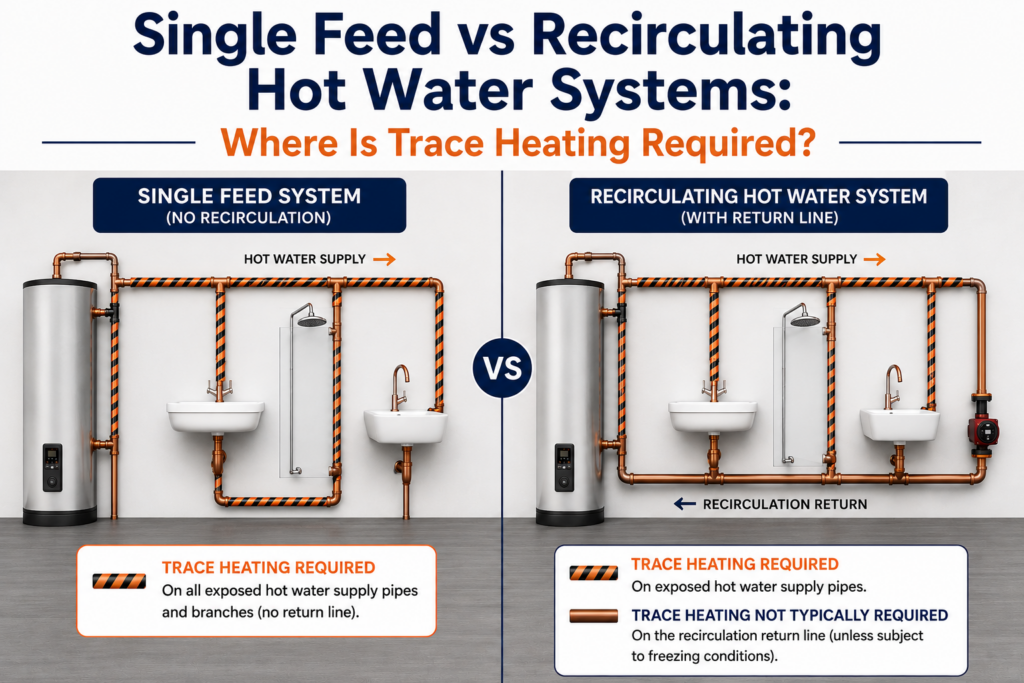
A single-feed system supplies hot water directly from the water heater to fixtures such as taps, showers, and sinks through a one-way piping network. Once hot water leaves the heater, it stays within the pipe until it’s demanded by one of these fixtures.
A recirculating system, by comparison, moves hot water in a closed-loop, continuous-flow system using a recirculating pump and a dedicated return line. This constant flow keeps hot water close to fixtures, helping provide instant hot water when taps or showers are used.
Both systems have advantages depending on building size, usage patterns, and operational requirements. However, they also differ significantly in how they manage heat loss and where trace heating pipework systems may be needed.
What is a single-feed hot water system?
A single feed system is the simpler of the two designs. Hot water travels directly from the water heater to each tap or outlet when it’s turned on without returning to the tank or heater.
In many domestic and smaller commercial properties, this approach is effective. The pipework layout is straightforward, installation costs are lower, and fewer components are required than with a recirculation system.
However, because water sits stationary inside the pipes between periods of use, heat gradually dissipates into the surrounding environment, , particularly where pipework runs alongside a cold water pipe in unheated areas.. The longer the pipe run between the heater and the fixture, the greater the temperature drop which can often result in:
- Delayed hot water delivery
- Increased water waste
- Cold water slug issues
- Higher wait times at distant fixtures
- Reduced user comfort
In older buildings or larger facilities, occupants may need to let water run for extended periods before hot water reaches the tap, kitchen sink, or shower. Even in a family home, wastewater can reach up to 14,000 gallons a year in a single-feed system while waiting for hot water.
This is one of the key reasons why temperature-maintenance trace heating may be introduced on single-feed systems, particularly where long pipe runs exist or where maintaining a minimum water temperature is important.
What is a recirculating hot water system?
A recirculating hot water system continuously circulates hot water around the building using a recirculation pump or circulating pump connected to a dedicated return line.
Instead of cooling within the pipework, the hot water supply continuously circulates around the recirculation line before returning to the water heater for reheating as needed. This creates a continuous loop that keeps hot water available throughout the system.
The primary advantage is convenience, with near instant hot water and reduced water waste. Recirculation systems are commonly installed in:
- Hotels and accommodation blocks
- Hospitals and healthcare buildings
- Leisure facilities
- Large residential developments
- Industrial buildings
- Commercial kitchens
- Multi-storey office buildings
Continuous recirculation also helps maintain a more consistent water temperature across larger buildings, where long pipe runs would otherwise cause substantial heat loss. However, because hot water is constantly circulating through the system, recirculating systems generally consume more energy than single-feed installations unless properly insulated and controlled.
While the lifespan of hot water recirculating pumps can often exceed 15 years, they may require maintenance to prevent issues such as leaks or noisy pipes.
Where is trace heating needed?
The need for a hot water trace heating system depends largely on the system layout, pipe routing, heat-loss risks, and the building’s operational demands.
Trace heating on single-feed systems
Trace heating is commonly installed on single feed systems where:
- Pipe runs are long
- Fixtures are located far from the water heater
- Maintaining water temperature is critical
- Pipework passes through cold or exposed areas
- Water stagnation risks need to be reduced
Installing a hot water recirculation system can reduce water bills by reducing water waste while waiting for hot water to reach the tap.
Without recirculation, water sitting within the pipe cools rapidly, especially in unheated voids or plant areas. Temperature maintenance trace heating helps offset this heat loss by applying controlled heat directly to the pipework. This reduces waiting times for hot water and minimises wasted water running down the drain before the desired temperature is reached.
Trace heating on recirculating systems
Although recirculating systems already maintain hot water movement, trace heating may still be required in certain situations. Common examples include:
- Branch lines extending from the main recirculation loop
- Dead legs and low-flow sections
- Exposed external pipework
- Areas vulnerable to freezing
- Long secondary pipe runs
Trace heating can also supplement systems where maintaining minimum water temperatures is necessary for hygiene or compliance purposes. In healthcare and public-sector environments, maintaining consistent hot water temperature is particularly important for Legionella control and system safety.
The benefits of insulation in hot water systems
Insulation is essential for reducing heat loss and improving energy efficiency in both systems. Poorly insulated hot water systems waste significant energy as heat escapes through pipe surfaces into surrounding spaces. This forces the water heater, tank, or boiler to work harder to maintain operating temperatures. Effective insulation helps to:
- Reduce energy consumption
- Maintain water temperature
- Improve system efficiency
- Reduce operating costs
At Thermal Clad, we regularly install insulated trace heating pipework systems designed to maintain reliable temperatures while maximising thermal efficiency.
Recirculating pump types and controls
Modern hot water recirculation systems can be controlled in several ways to balance convenience with energy efficiency.
Continuous recirculation
Continuous recirculation keeps hot water moving constantly through the system. While this delivers the fastest hot water response, it also uses more energy due to constant pump operation and ongoing heat loss.
Timer-controlled systems
Timer controls allow the recirc pump to operate only during peak occupancy periods, reducing unnecessary energy use during quieter hours.
Demand-based systems
Demand-controlled systems activate the recirculation pump only when required, helping reduce running costs while improving hot water delivery. These systems may use push-button, motion-sensor, or occupancy-sensor controls.
Variable-speed pumps
Modern variable-speed circulating pumps automatically adjust flow rate based on system demand, improving overall efficiency and reducing wear on components.
Installation and retrofit considerations
The ease of installation often influences whether a building adopts a single-feed or recirculating system. Single feed systems are generally easier and cheaper to install because they require less pipework and no dedicated return line. Recirculating systems, however, require:
- A recirculation return line
- Additional controls
- A circulating pump
- Balancing valves
- More complex commissioning
In new construction, installing a dedicated return line is relatively straightforward. Retrofitting recirculation into an old house or existing commercial building can be more challenging due to limited access and existing pipe layouts.
In some retrofit applications, under-sink bypass valve systems may be used to create hot water recirculation without installing a full dedicated return line. However, these systems can occasionally introduce warm water into the cold water line, resulting in temporary cold water temperature issues at fixtures.
Energy use and water efficiency
One of the biggest considerations in any commercial hot water systems comparison is balancing energy efficiency against water savings and occupant comfort. Single-feed systems usually use less energy because water is heated only when needed. However, they can waste substantial amounts of water while users wait for hot water to reach distant fixtures.
Recirculating systems reduce water waste significantly by delivering hot water more quickly. But they can have a higher energy consumption due to:
- Continuous pump operation
- Ongoing heat loss
- Reheating demands
This is why insulation and temperature maintenance trace heating are so important. Properly insulated recirculation systems help reduce heat loss and improve efficiency. Modern controls and timers can further reduce unnecessary energy consumption.
Which system is best?
There’s no universal answer when comparing a single feed and a recirculating hot water system. The best system for you will depend on building size, occupancy levels, pipe layout, usage patterns, and operational priorities.
Single-feed systems are best for smaller homes or apartments where the water heater is centrally located near fixtures, and are often suitable for:
- Short pipe runs
- Low occupancy properties
- Simple retrofit projects
- Lower budget installations
Recirculating systems are generally preferred for:
- Large commercial buildings
- Hotels and healthcare facilities
- Multi-storey developments
- Buildings with distant fixtures
- High-demand hot water systems
Trace heating may be required in either system, where maintaining water temperature, reducing heat loss, or protecting pipework from cold conditions is important.
Why Choose Thermal Clad?
At Thermal Clad, we provide specialist insulation, trace heating, and cladding solutions for commercial and industrial pipework systems across the UK. With over 40 years of combined industry experience, we help clients improve energy efficiency, maintain system performance, and protect pipework from heat loss and environmental exposure.
We work with both private and public-sector clients on domestic hot water services, trace-heating pipework systems, and industrial insulation projects, delivering reliable, high-quality systems tailored to your operational requirements.
If you’re looking for the right system for your building, contact Thermal Clad today to discuss your requirements.
Frequently Asked Questions
Expert Guides
Our goal at Thermal Clad is to not only provide our customers with the finest service possible but also to keep them informed about new products and industry trends.
Please feel free to check out some of our expert insulation guides below:
When Do Commercial Tanks and Vessels Need Insulation?
Industrial tank insulation is used where a tank or vessel needs help controlling heat transfer, maintaining a required temperature,…
Pipe Insulation Standards: What Should a Compliant Contractor Provide?
Pipe insulation standards are not only about choosing a material and wrapping a pipe. On commercial and industrial projects,…
How Poor Pipework Insulation Increases Heat Loss and Energy Costs
Pipework carries heated water, steam and other fluids throughout commercial and industrial buildings. When it is left bare, inadequately…
Where Is Acoustic Insulation Most Needed in Commercial and Industrial Building Services?
Unwanted noise is a common challenge in commercial and industrial buildings, affecting everything from occupant comfort and productivity to…
Single Feed vs Recirculating Hot Water Systems: Where Is Trace Heating Required?
Hot water systems are a vital part of commercial and industrial buildings, particularly where fast delivery, temperature control, and…
When Should You Use Weatherproof Jacketing on External Pipework and Ductwork?
External pipework and ductwork are constantly exposed to harsh environmental conditions, including freezing temperatures and heavy rain, as well…
Black and Colour-Finished Insulation Systems for Exposed HVAC Services
Modern commercial and industrial buildings increasingly leave ductwork and pipes exposed as part of the architectural concept. In offices,…
Insulation Solutions for Exposed Pipework and Ductwork in Commercial Interiors
In commercial and industrial buildings, exposed pipework and ductwork form a critical part of the mechanical infrastructure that supports…

Insulating Exposed Ductwork: Options, Aesthetics, and Performance
Key Takeaways This guide outlines the main insulation methods, planning considerations, and aesthetic requirements raised by facilities managers, contractors,…
Commercial Building Services Insulation: Reducing Energy Loss, Carbon Emissions and Costs
In commercial buildings, a significant amount of energy loss occurs through mechanical and HVAC services rather than the building…