

Black and Colour-Finished Insulation Systems for Exposed HVAC Services
- Why Black and Colour-Finished Insulation Is Used on Exposed Services
- Thermal Performance and Energy Efficiency
- Managing Condensation and Moisture Risk
- Common Materials Used in Black and Colour-Finished Systems
- Aesthetic and Functional Design Considerations
- Installation Standards for Exposed Insulation
- Compliance and Safety
- Why Choose Thermal Clad
- Frequently Asked Questions
Modern commercial and industrial buildings increasingly leave ductwork and pipes exposed as part of the architectural concept. In offices, restaurants, retail units, gyms and public buildings, visible services are no longer hidden above drywall ceilings but integrated into the overall design language. In these environments, black ductwork insulation and colour-finished pipe insulation systems allow building services to deliver thermal performance while contributing to a controlled and intentional appearance.
When insulation is visible, it must do more than reduce heat loss. It must maintain thermal resistance, manage condensation, support safety and building regulations, and present a clean, straight and durable finish. This requires careful material selection, correct thickness calculations and professional installation.
This guide explains how black and colour-finished insulation systems are used on exposed ductwork and pipes, how they enhance energy efficiency and appearance, and what to consider when specifying and installing them on commercial and industrial projects across the UK.
Why Black and Colour-Finished Insulation Is Used on Exposed Services
In exposed ceiling designs, traditional silver foil-faced ductwork insulation can draw unwanted visual attention. Black finishes allow ductwork to recede into dark soffits, creating a sleek and cohesive aesthetic. Architects and contractors often specify black insulation products where services are intentionally left visible.
The choice to use black insulation is usually based on achieving a specific visual result while maintaining robust moisture protection and thermal performance. The colour itself does not change the insulation’s thermal resistance. Performance depends on the core material, thickness and installation quality rather than appearance.
Black finishes are commonly applied to ventilation ductwork, chilled water pipes and heating pipes in commercial buildings where maintaining a clean industrial aesthetic is important. In residential loft-style developments and creative office spaces, colour-matched pipe insulation enhances the overall design without compromising energy efficiency.
Thermal Performance and Energy Efficiency
Insulation works by trapping air within its structure. This trapped air reduces heat transfer and helps maintain temperature within ductwork and pipes. If insulation is compressed during installation, its thermal resistance reduces and performance drops.
By limiting energy loss through ductwork and pipes, insulation products contribute to measurable energy savings in both commercial and residential applications. Lower heat loss reduces demand on boilers, chillers and air handling systems, which in turn reduces energy consumption and greenhouse gas emissions. Over the lifecycle of a building, this improvement in efficiency can represent a significant operational saving.
Meeting the required insulation thickness in accordance with building regulations is essential. In the UK, compliance with Part L requires designers to calculate appropriate U-values and ensure that ductwork and pipe insulation meet performance targets. Black or colour-finished systems can meet these requirements when specified correctly.
Managing Condensation and Moisture Risk
Condensation control is crucial when insulating exposed ducts and pipes, particularly in spaces with higher humidity such as gyms, leisure centres or hospitality venues. When chilled air passes through ductwork or cold water flows through pipes, the external surface temperature can fall below the dew point, allowing moisture to form.
A continuous vapour barrier prevents warm, moist air from reaching cold surfaces. Closed-cell elastomeric insulation products can offer near-zero permeability, effectively acting as a superior vapour barrier when installed with compatible adhesives and sealed joints. Mineral wool systems require carefully sealed facings and joint tapes to maintain moisture protection.
If moisture penetrates insulation, performance reduces, and the risk of mould growth increases. Maintaining vapour integrity across seams, corners and penetrations is therefore essential. Proper installation, including the use of appropriate adhesives and continuous sealing, prevents condensation and protects long-term durability.
Common Materials Used in Black and Colour-Finished Systems
Black pipe insulation lagging encompasses a variety of materials, each suitable for specific temperature ranges and applications.
Elastomeric rubber, commonly referred to as EPDM or nitrile foam, offers flexibility and strong moisture resistance. It is widely used on chilled water pipes and smaller ducts where complex geometry requires a flexible solution. Many elastomeric systems are easy to install and incorporate an integrated vapour barrier.
Mineral wool provides high fire resistance and acoustic performance. Black-faced mineral wool ductwork insulation systems are commonly installed on large rectangular ducts in commercial and industrial buildings. The black-coated facing provides a clean, matte finish while maintaining thermal performance.
ProClad 150 can be used to clad insulated ductwork systems where the finish is required to be of a particular colour due to architectural requirements. ProClad 150 is a self‑adhesive, multi‑layer insulation cladding system used to protect insulated ductwork. It provides a weatherproof, UV‑resistant, and zero‑permeability outer jacket that replaces traditional finishes like PIB or metal cladding. It’s widely used in both external and internal environments. It can be purchased in a selection of colours (white, silver smooth, silver embossed, grey and black).
Aesthetic and Functional Design Considerations
When exposed insulation becomes part of the visible ceiling space, appearance matters. A professional finish requires straight seams, consistent band spacing and careful cutting around fittings. Poorly cut or misaligned insulation disrupts visual continuity and undermines the intended design.
Colour selection should consider the surrounding property finishes. Matte black finishes tend to reduce glare and hide minor surface irregularities, while glossier finishes can create a more reflective industrial effect.
Beyond appearance, insulation enhances acoustic comfort. Mineral wool and fibrous liners reduce noise breakout from ductwork, contributing to quieter office and hospitality environments. This additional layer of acoustic control improves occupant comfort while maintaining system performance.
Durability is also important. In high-traffic or accessible areas, exposed ductwork and pipes require protection against impact. Metal cladding systems, including aluminium or stainless steel, provide robust protection while maintaining a sleek finish.
Installation Standards for Exposed Insulation
Installation quality directly affects performance, appearance and compliance. Proper surface preparation is crucial for adhesives to bond effectively. Duct surfaces must be clean and dry before insulation is applied.
When installing black ductwork insulation externally around sheet metal ducts, joints must be sealed with mastic or appropriate tape to maintain the vapour barrier. Insulation should not be compressed, as compression reduces thermal resistance and overall efficiency.
For pipe insulation, sections must fit tightly around pipes without gaps. At supports and hangers, care must be taken to prevent crushing the insulation layer. Where stainless-steel pipes are insulated, pre-wrapping with aluminium foil can provide additional protection against corrosion under insulation before the main insulation layer is installed.
Thickness calculations are crucial to strike a balance between minimising heat loss and preventing condensation. Under-specifying thickness may reduce price initially, but increases long-term operational costs. Over-specifying without technical justification can impact space and budget unnecessarily. Designers should assess temperature range, ambient conditions and building regulations before confirming insulation thickness.
Regular inspection is recommended to maintain reliability. Exposed installations should be checked for damage, moisture ingress or peeling facings to ensure long-term performance.
Compliance and Safety
All insulation materials used on exposed HVAC systems must meet applicable building regulations and fire performance standards. Mineral wool systems can achieve high fire resistance classifications, while elastomeric and PIR systems must be specified carefully to meet safety requirements.
Fire classification depends on the core insulation material and its facing, not the colour. Specifiers must confirm that the complete system meets relevant standards for commercial or industrial use.
Properly installed insulation supports compliance with energy efficiency regulations and enhances sustainability by reducing overall energy demand.
Why Choose Thermal Clad
At Thermal Clad, we specialise in mechanical insulation and cladding systems for exposed pipework, ductwork and plant services across commercial and industrial projects in the UK.
We install black and colour-finished insulation systems that combine performance with clean visual detailing. Our teams work with contractors and designers to ensure correct thickness, vapour control and compliance with building regulations, while delivering straight, consistent finishes suitable for exposed ceiling environments.
From pipe insulation on heating and chilled water systems to black-faced ductwork insulation and protective metal cladding, we focus on durability, efficiency and long-term reliability.
If you are planning a project involving exposed HVAC services, contact Thermal Clad to discuss your specific requirements.
Frequently Asked Questions
Expert Guides
Our goal at Thermal Clad is to not only provide our customers with the finest service possible but also to keep them informed about new products and industry trends.
Please feel free to check out some of our expert insulation guides below:
How Poor Pipework Insulation Increases Heat Loss and Energy Costs
Pipework carries heated water, steam and other fluids throughout commercial and industrial buildings. When it is left bare, inadequately…

Where Is Acoustic Insulation Most Needed in Commercial and Industrial Building Services?
Unwanted noise is a common challenge in commercial and industrial buildings, affecting everything from occupant comfort and productivity to…
Single Feed vs Recirculating Hot Water Systems: Where Is Trace Heating Required?
Hot water systems are a vital part of commercial and industrial buildings, particularly where fast delivery, temperature control, and…
When Should You Use Weatherproof Jacketing on External Pipework and Ductwork?
External pipework and ductwork are constantly exposed to harsh environmental conditions, including freezing temperatures and heavy rain, as well…
Black and Colour-Finished Insulation Systems for Exposed HVAC Services
Modern commercial and industrial buildings increasingly leave ductwork and pipes exposed as part of the architectural concept. In offices,…
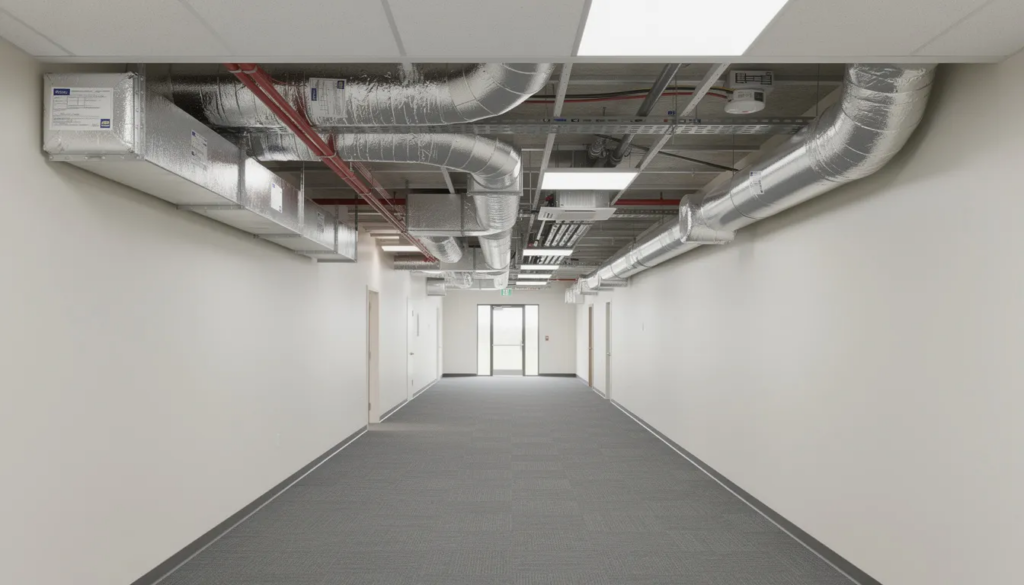
Insulation Solutions for Exposed Pipework and Ductwork in Commercial Interiors
In commercial and industrial buildings, exposed pipework and ductwork form a critical part of the mechanical infrastructure that supports…

Insulating Exposed Ductwork: Options, Aesthetics, and Performance
Key Takeaways This guide outlines the main insulation methods, planning considerations, and aesthetic requirements raised by facilities managers, contractors,…
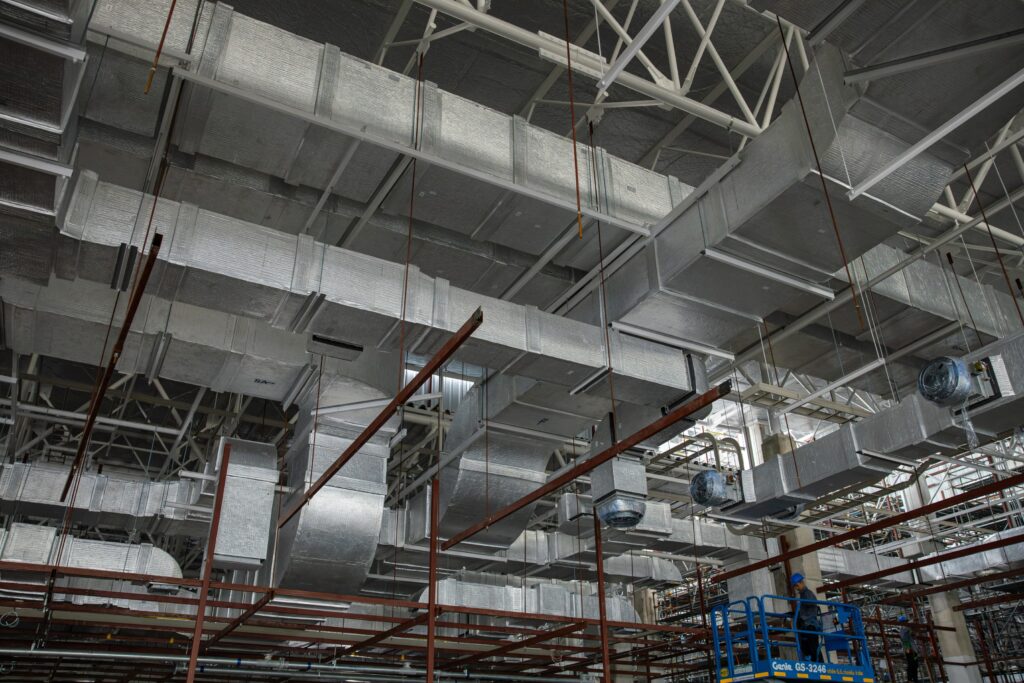
Commercial Building Services Insulation: Reducing Energy Loss, Carbon Emissions and Costs
In commercial buildings, a significant amount of energy loss occurs through mechanical and HVAC services rather than the building…

How to Prevent Condensation and Corrosion Under Insulation (CUI)
Corrosion Under Insulation (CUI) is a well-recognised issue in industrial environments and continues to be a cause of unplanned…
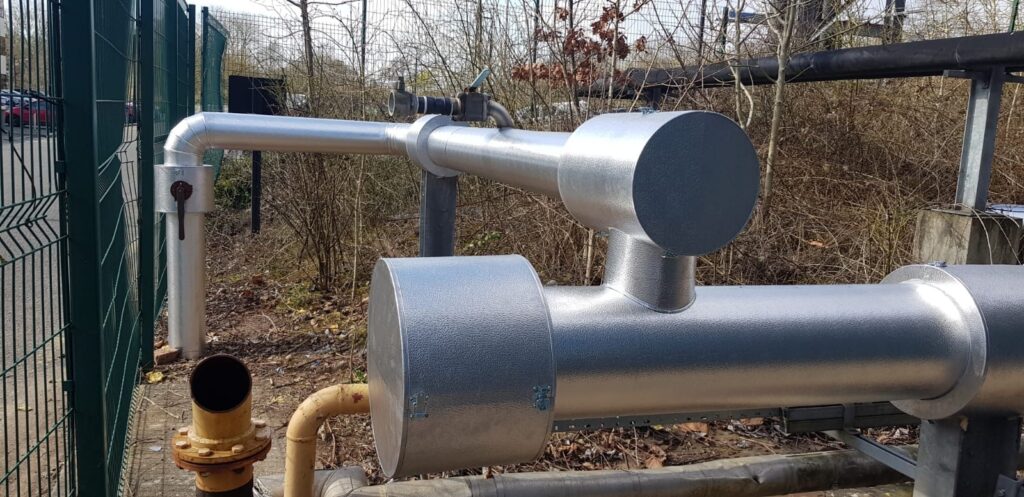
Sustainable Insulation: Reducing Carbon in Building Services
Sustainable insulation materials are an important part of reducing carbon emissions within modern building services. Mechanical and electrical systems…